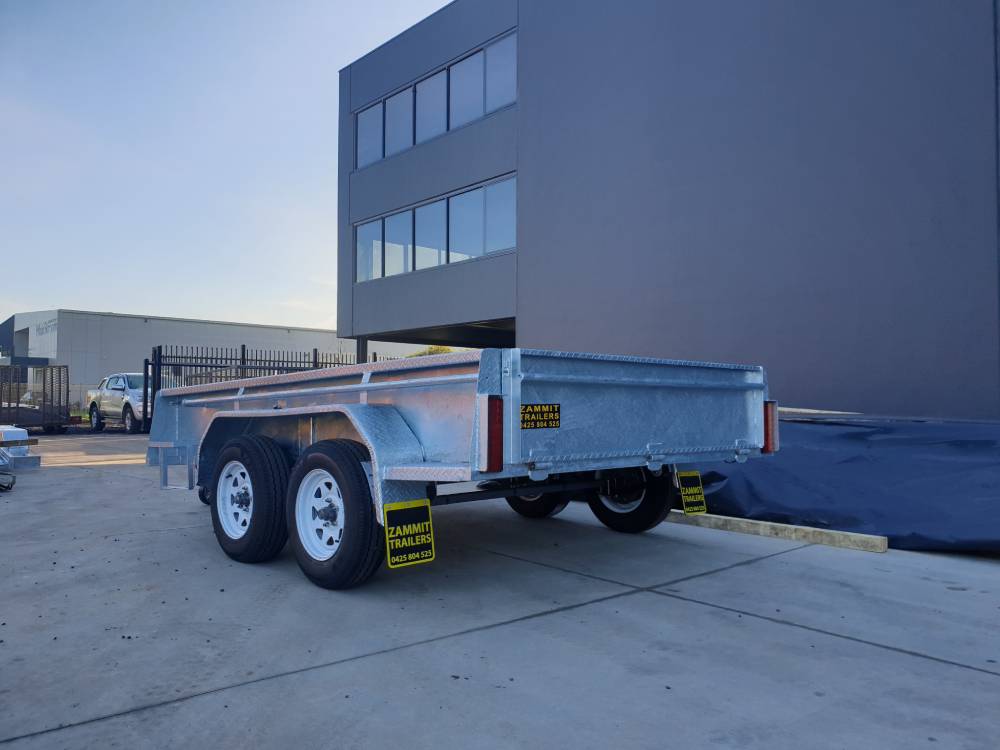

If you tow a trailer for work or travel around Victoria, you already know how strict vehicle safety checks can be. A simple missed light or loose chain could earn you a defect notice — and worse, take your trailer off the road until it’s fixed.
At Zammi Trailers, we’ve seen it all. From minor oversights to serious compliance issues, most defect notices are completely preventable with a proper pre-trip inspection. In this guide, we’ll cover essential checks Victorian inspectors expect to see before you hit the road — whether you’re towing a box trailer, a tradesman setup, or a heavy-duty tandem.
1. Inspect Tyres for Wear and Pressure
Tyres must have at least 1.5 mm of tread depth across the entire width — same rule as your vehicle. Any visible cords, uneven wear, or mismatched tyres could lead to an instant defect.
Checkpoints:
- Inflate tyres to the manufacturer’s recommended PSI (found on the sidewall).
- Match tyre ratings with your Aggregate Trailer Mass (ATM).
- Don’t forget the spare tyre — it’s just as important.
2. Secure Wheel Bearings and Hubs
In Victoria, inspectors often check hub temperature and wheel movement. A failing bearing can cause wobbling, brake drag, or even a wheel detachment.
Checkpoints:
- Spin each wheel by hand — it should turn smoothly without grinding noises.
- Check for side-to-side play.
- Repack bearings with high-temperature grease every 10,000 km or before long trips.
3. Verify Brake Functionality
If your trailer has a Gross Trailer Mass (GTM) over 750 kg, working brakes are mandatory under VSB1 (Revision 6, 2025). For trailers above 2,000 kg ATM, a breakaway system is also required.
Checkpoints:
- Test the handbrake and electric braking systems before each trip.
- Inspect cables, brake shoes, and magnets for wear.
- Make sure your in-cab brake controller is calibrated and responsive.
4. Confirm Safety Chain and Coupling Ratings

Inspectors always look at the coupling and chain first — they’re the most critical safety link between your tow vehicle and trailer.
Checkpoints:
- Check your safety chain rating equals or exceeds your trailer’s ATM.
- The D-shackle or rated connector must be stamped and undamaged.
- Ensure the coupling locks securely with minimal play.
5. Test the Suspension
Your trailer’s suspension affects stability and braking distance. Weak springs or worn bushes increase sway — a red flag for inspectors.
Checkpoints:
- Look for cracked leaf springs, worn shackles, or oil leaks from shock absorbers.
- Check that suspension bolts are tight and free from corrosion.
- Make sure both sides of the trailer sit level when loaded.
6. Inspect Reflectors and Side Markers
Reflectors are often overlooked, but missing or faded ones can attract defect notices — especially in low-light towing conditions.
Checkpoints:
- Fit red reflectors at the rear, amber on the sides (for trailers over 7.5 m), and white at the front if required.
- Replace cracked or faded units.
- Clean reflectors regularly; even a thin dust film reduces visibility.
7. Check Load Security and Tie-Downs
An unsecured load isn’t just dangerous — it’s an immediate fine under VicRoads load restraint laws.
Checkpoints:
- Use rated ratchet straps or load-rated chains (not ropes).
- Ensure anchor points are welded or bolted to the frame.
- Cover loose materials with a tarp.
8. Review Number Plate, VIN, and Rego

Missing or obscured number plates are one of the simplest ways to get caught.
Checkpoints:
- Make sure your plate is clean, visible, and illuminated.
- Verify your VIN plate is legible and fixed permanently.
- Check that registration details match your towing vehicle records on the VicRoads database.
9. Assess Overall Roadworthiness
Finally, inspectors perform a general visual scan. They’re trained to spot rust, cracks, poor welding, or overloading instantly.
Checkpoints:
- No visible rust on structural members or drawbars.
- Mudguards firmly attached, no sharp edges or protrusions.
- No oil leaks, sagging doors, or damaged panels.
Bonus: Keep a Pre-Trip Checklist Handy
Create a laminated checklist and keep it in your glovebox. Doing a two-minute walk-around before each trip can save you hours of delay and hundreds in fines.
Zammi Trailers recommends setting a recurring reminder in your phone every Monday morning — check tyres, lights, and couplings before your first tow of the week.
Why Compliance Matters for Tradies and Business Owners
Ignoring pre-trip checks doesn’t just risk fines — it damages your business reputation. A defective trailer on the roadside, loaded with tools or materials, means lost hours and unhappy clients.
By keeping your trailer in peak condition, you:
- Reduce downtime and maintenance costs.
- Avoid VicRoads defect penalties.
- Extend the lifespan of your trailer and its components.
- Ensure the safety of your team, cargo, and every road user.
Stay Road-Ready with Zammi Trailers
At Zammi Trailers, we build and customise trailers that meet — and often exceed — Victorian and Australian Design Rules (ADR) standards. From heavy-duty couplings to sealed LED lighting and reinforced chassis designs, every unit is engineered for reliability and compliance.


