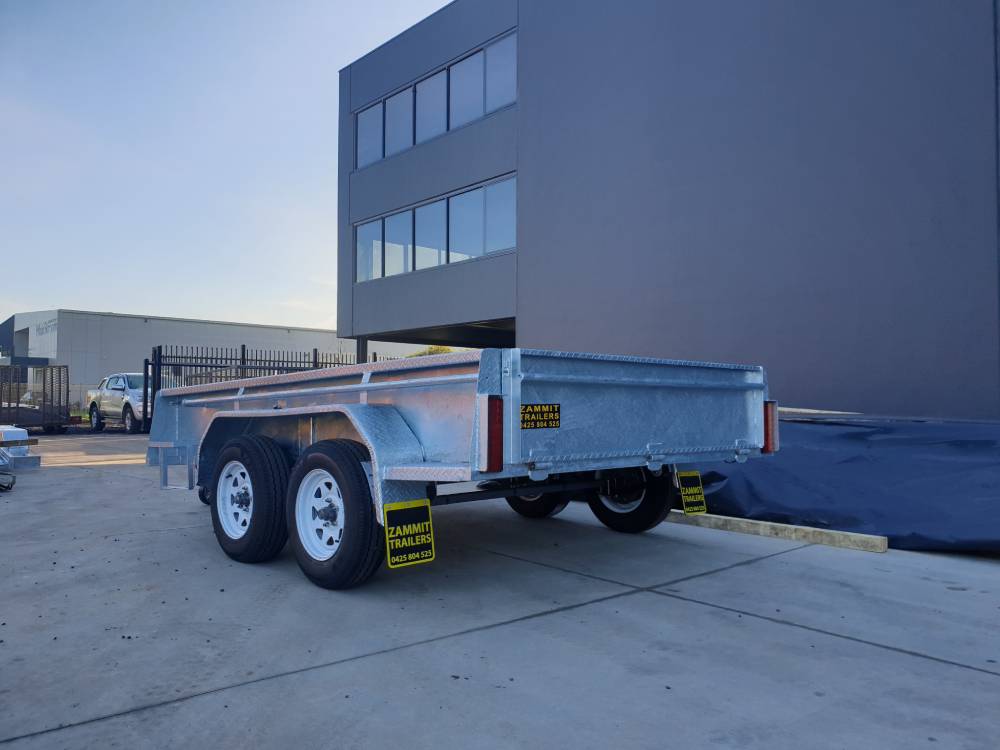

Trailer brakes are not a detail to leave until the end of a build. They affect how your trailer feels behind the vehicle, how confidently you can manage a loaded stop and what equipment your tow vehicle needs. For buyers comparing electric trailer brakes Melbourne options with mechanical systems, the best choice comes down to the trailer’s approved mass, typical load, towing frequency and operating conditions. Neither setup is automatically better. The right system is the one properly specified for the work your trailer will actually do.
Why trailer brake choice deserves careful thought
A trailer can look well built, have the right deck size and carry the intended equipment, yet still be poorly matched to the way you tow if the braking setup is not considered early. Braking affects stopping behaviour, downhill control, load stability and the connection between the trailer and tow vehicle.
This matters most when the load changes from trip to trip. A car trailer may travel empty one day and carry a vehicle the next. A plant trailer may carry different machines, attachments and fuel loads across the week. The brake system needs to suit the trailer’s approved rating and expected operating range, not just the lightest trip it will make.
It is also worth considering who will tow it. If several staff members use the same trailer, a predictable and correctly adjusted braking setup can make day-to-day operation simpler and safer.
The short answer: there is no one-size-fits-all system
Mechanical override brakes and electric trailer brakes both have practical applications. Mechanical systems are often chosen where a straightforward, self-contained braking arrangement suits the trailer and its intended use. Electric brakes are commonly preferred by owners who tow regularly, carry variable loads or want more control over how the trailer responds under braking.
The decision should not be made from a single feature or an upfront price alone. Start with the trailer’s approved aggregate trailer mass, known as ATM, then consider payload, loading pattern, tow vehicle compatibility and the roads you use most often. A qualified trailer professional can confirm a compliant specification for the complete trailer and towing combination.
Begin with the work your trailer needs to do
Before comparing brake types, write down the real job. Be specific about what you tow, how often you tow it and where it goes. A trailer used a few times each year for local runs has different demands from one used every weekday across Melbourne’s freeways, industrial estates and outer-suburban worksites.
- What is the trailer’s ATM and tare mass?
- What payload will it carry most often, rather than only on rare occasions?
- Will the load remain consistent or vary significantly between trips?
- Is the trailer towed mainly locally, on highways, through stop-start traffic or on steep access roads?
- Which tow vehicles will be used, and are they equipped for the proposed braking system?
- Will the trailer be used occasionally, daily or across a fleet?
These answers create a clearer brief than simply asking for “the best brakes”. They also help prevent costly changes after the trailer has been built or purchased.
How mechanical override trailer brakes work
Mechanical trailer brakes are often referred to as override or inertia brakes, although designs can vary. In a typical override arrangement, the coupling responds when the tow vehicle slows and the trailer pushes forward. That movement activates the trailer’s braking mechanism through the relevant linkage or cable arrangement.
The key point is that the trailer’s braking response is driven by the trailer compressing against the towing vehicle during deceleration. It does not rely on an in-cab electric brake controller in the same way an electric braking system does.
Because there are different mechanical designs and trailer configurations, it is not sensible to assume every mechanical system behaves identically. The coupling, brake hardware, adjustment and overall trailer setup all affect performance. A system should be selected and maintained as part of the complete trailer, not treated as an isolated component.
Where mechanical brakes can make sense
A mechanical setup may suit an owner looking for a simpler arrangement on a trailer used for lighter-duty or occasional work, provided it is appropriate for the trailer’s rating and intended use. Some buyers also value not needing an electric brake controller fitted to every tow vehicle.
For example, a trailer that is normally towed by different vehicles for straightforward local jobs may suit a mechanical arrangement where the final specification allows it. The appeal is often practical: fewer vehicle-side electrical components and a familiar operation for drivers who do not regularly tow heavier loads.
That does not mean mechanical brakes are maintenance-free. Couplings, cables, linkages, brake components and adjustment still need regular attention. A simple system only remains dependable when it is inspected and serviced properly.
Limits to consider with mechanical braking
Mechanical override braking generally provides less direct driver adjustment than an electric system with an in-cab controller. If you regularly tow with substantially different loads, the response is not as readily tailored from the driver’s seat to suit an empty or heavily loaded trailer.
Its operation also depends on the trailer pushing against the vehicle during deceleration. In some towing situations, this can feel different from a system that is activated electronically alongside the tow vehicle’s brakes. Drivers should understand the feel of the setup and allow suitable following distance, particularly in wet weather, busy traffic or when carrying valuable equipment.
Wear, poor adjustment or damage to mechanical components can change braking behaviour over time. If the trailer pulls, brakes unevenly, feels unsettled under braking or has a noisy coupling, arrange an inspection rather than continuing to tow and hoping the issue settles.
How electric trailer brakes work
Electric trailer brakes use electrical signals from the tow vehicle to activate the trailer’s brake assemblies. A brake controller fitted in, or integrated with, the tow vehicle sends a controlled electrical output through the trailer connection when the vehicle brakes. This creates braking force at the trailer wheels.
The controller and wiring are central to how the system performs. The installation must be suitable for the towing vehicle and trailer, with sound connections at the plug, socket, wiring loom and brake assemblies. If any part of that chain is damaged, corroded or incorrectly set up, braking response can be affected.
Many electric brake systems allow the driver to adjust the braking output to better suit the load and conditions. That adjustability is a major reason regular towers often choose electric brakes, but it also means the system needs to be correctly configured and checked before use.
What the brake controller does
A brake controller is the link between the tow vehicle’s braking input and the electric brakes on the trailer. Depending on the controller type and installation, it can apply trailer braking in response to vehicle braking and allow the driver to set an appropriate braking level.
In practical terms, the controller helps you avoid a trailer braking too softly or too aggressively for the load. A lightly loaded trailer may need a different setting from the same trailer carrying a car, machine or full commercial load. The correct setting should be established carefully in a suitable, safe location, following the equipment manufacturer’s instructions and professional advice.
A controller is not a substitute for correct trailer loading, tyre condition, suitable tow vehicle capacity or proper maintenance. It is one part of a towing system that must work together.
When electric trailer brakes may be the better fit
Electric brakes are often a strong option for owners who tow regularly, carry changing loads or want more control over braking response. They are widely considered for car trailers, plant trailers and other working trailers where load weight and road conditions can vary across the week.
If you are specifying a purpose-built trailer, discuss the braking system at the same time as the deck length, ramps, axle arrangement and load restraint points. Zammit Trailers can help buyers consider brake configuration as part of a custom car trailer setup, rather than treating it as an afterthought.
Electric braking can also be useful where the trailer is regularly used on arterial roads, freeways or routes involving frequent slowing and stopping. The benefit is not simply more braking. It is having a properly matched, adjustable system that supports consistent towing behaviour when correctly installed and maintained.
Electric brakes also bring extra requirements
The added control of electric brakes comes with added responsibility. Your tow vehicle needs a suitable brake controller and correctly installed electrical connection. The trailer plug, socket and wiring need to be in good condition, and the controller needs to be set appropriately for the trailer and load.
Electrical faults can be frustrating because they are not always obvious at a glance. A damaged cable, loose plug pin, water ingress, corroded connection or worn component may affect the signal reaching the brakes. For that reason, test lights and brake operation before heading out, especially after the trailer has been parked for an extended period.
Do not attempt to guess your way through a brake conversion or wiring repair if you are unsure. Braking equipment is safety-critical, and modifications can affect compliance. Have a qualified professional assess the trailer, tow vehicle and intended use before making changes.
Electric trailer brakes Melbourne owners should compare carefully
When comparing electric trailer brakes Melbourne suppliers and mechanical alternatives, look beyond the name of the brake type. Ask how the system will suit your specific trailer rating, wheel and axle configuration, tow vehicle and normal payload. A quality installation that is correctly matched to the job matters more than choosing a system based on reputation alone.
Melbourne conditions add their own practical considerations. Stop-start traffic, wet winter roads, freeway travel, narrow worksite access and trips beyond the metro area can all influence what feels manageable behind the wheel. If your trailer sees a mix of conditions, adjustable electric braking may be worth discussing. If its use is simpler and less frequent, a suitable mechanical option may still be the sensible choice.
The right answer should be based on an honest conversation about usage, not a blanket recommendation.
Compare the two systems on daily usability
A direct comparison can make the decision easier:
- Driver adjustment: Electric brakes typically offer adjustable braking response through a compatible controller. Mechanical override systems generally offer less on-the-go adjustment.
- Tow vehicle equipment: Electric brakes require suitable vehicle-side controller and electrical provisions. Mechanical systems do not rely on an in-cab brake controller in the same way.
- Typical feel: Electric braking can be set to support a more tailored response for changing loads. Mechanical braking responds through the trailer’s coupling action during deceleration.
- Maintenance focus: Mechanical systems need attention to their coupling, linkage, cables and brake adjustment. Electric systems require inspection of electrical connections, wiring, controller operation and brake components.
- Best fit: Mechanical may suit some straightforward, occasional applications. Electric may suit regular towing, variable loads and owners who value adjustable response.
These are broad comparisons, not a substitute for a specification check. The trailer’s approved ratings and configuration always come first.
ATM, payload and axle configuration come first
Brake choice cannot be separated from mass ratings. ATM is the maximum permitted mass of the fully loaded trailer when it is not coupled to the tow vehicle. Tare mass, payload capacity, axle capacity, tyre ratings and coupling rating all form part of the broader picture.
It is easy to underestimate actual load weight. A vehicle trailer may carry the vehicle, tools, spare wheels, winch equipment, ramps and recovery gear. A plant trailer may carry a machine, buckets, attachments, fuel and site equipment. Those additions can materially change how the trailer tows and the braking system it needs.
Never select brake equipment based solely on an estimated payload or the empty trailer weight. Confirm the complete trailer specification, keep within every applicable rating and distribute the load correctly. If you are unsure of actual weights, have the setup assessed before regular use.
Check your tow vehicle before choosing a system
The tow vehicle is part of the braking decision. Confirm its towing capacity, towball download limit, towbar rating and any manufacturer requirements relating to trailer brakes or brake controllers. A capable trailer cannot overcome the limitations of the vehicle towing it.
If you use more than one tow vehicle, identify that early. An electric-braked trailer may be straightforward when towed by a dedicated work ute with a properly fitted controller, but less convenient if it is regularly moved by other vehicles without the same equipment. In that situation, the operating plan matters as much as the technical preference.
Also inspect the trailer plug and vehicle socket together. They need to be compatible, securely connected and protected from damage. Small electrical issues at the connection point can create large problems once you are on the road.
Melbourne roads and weather affect towing decisions
Trailer brakes work alongside driver behaviour, tyre grip and load security. Melbourne drivers can experience wet roads, sudden traffic changes and long freeway stretches on the same day. Those conditions reward a trailer that is loaded correctly, serviced properly and matched to the vehicle.
Allow more stopping distance when towing, particularly in rain or with a heavier load. Avoid sharp braking where possible, reduce speed before bends and make sure the load is restrained so it cannot shift and upset the trailer’s balance. Brake type cannot compensate for poor loading or rushed driving.
For commercial users travelling between jobs, consistency matters. A known load procedure, pre-departure check and servicing schedule will do more for reliable towing than any single product feature.
What to inspect and service over time
Every braking system needs routine checks. Before a trip, inspect tyres, lights, safety chains, coupling operation and the trailer connection. For electric systems, check the plug, cable and controller operation. Where breakaway equipment is fitted, inspect it in line with the manufacturer’s guidance and have faults addressed promptly.
During scheduled servicing, a trailer professional can inspect brake wear, adjustment, bearings, wiring, connections, coupling components and any signs of corrosion or damage. Parts should be replaced with suitable components for the trailer’s specification. If you need replacement items or advice on compatible equipment, see the available trailer parts in Melbourne.
Warning signs include pulling to one side, reduced braking response, unusual noises, a dragging brake, damaged cables, flickering lights or a controller warning. Book an inspection early. Brake issues are rarely improved by continued use.
Compliance should be confirmed for your exact trailer
Trailer brake requirements can vary according to the trailer’s mass, configuration and intended registration status. Applicable Australian Design Rules, Victorian registration requirements and roadworthiness obligations need to be considered for the particular trailer, not assumed from advice given for a different setup.
This is especially relevant when buying a used trailer, increasing payload, changing axles, converting brake types or modifying electrical equipment. A modification that seems minor may affect the trailer’s approved configuration or create an issue at inspection time.
Ask a qualified manufacturer, repairer or other appropriately qualified professional to confirm the correct approach before ordering or modifying braking equipment. Keep records of servicing and approved work, particularly for trailers used in a business.
A practical checklist before you order or upgrade
Use these questions to guide the conversation with your trailer supplier or repairer:
- What is the trailer’s ATM, tare mass and realistic loaded weight?
- What loads will I carry most often, and how much will they vary?
- Which vehicle or vehicles will tow the trailer?
- Does each tow vehicle have the required capacity and equipment?
- Will I benefit from adjustable electric braking, or does a suitable mechanical setup meet the job?
- What maintenance will the chosen system need, and who will complete it?
- Are the proposed brakes, coupling, axles, tyres and electrical components matched as one compliant package?
- Have I confirmed current requirements for the trailer’s exact mass and configuration?
Good advice should answer these questions clearly. It should also explain any trade-offs, rather than pushing you towards a system that does not suit your towing routine.
Choose brakes around the job, not the label
Mechanical and electric brakes can both be appropriate when they are correctly selected, installed and maintained. Mechanical systems may be a practical fit for some simpler applications. Electric systems can offer useful adjustment and control for regular towing and changing loads. The better choice depends on your trailer, load, tow vehicle and operating conditions.
If you are considering electric trailer brakes Melbourne owners can rely on, start with an accurate picture of the work ahead. Discuss the complete trailer specification with a qualified professional, confirm current compliance requirements and choose a setup that gives you confidence every time you tow.


