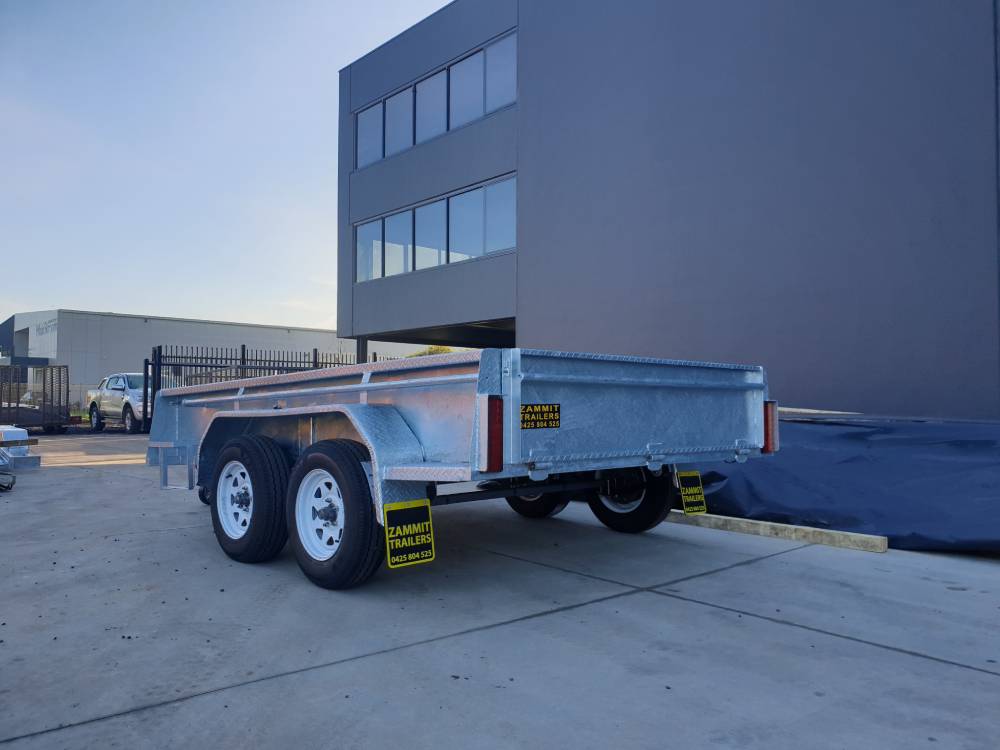

Ordering a new trailer should not come down to choosing the lowest number on a quote. When comparing trailer manufacturers Werribee buyers can access, the better approach is to define the job clearly, compare equivalent specifications and know exactly what will happen between placing a deposit and collecting the finished trailer. A well-prepared order helps you avoid missing accessories, unsuitable loading arrangements and surprises at handover.
For Melbourne’s western suburbs, working with a local manufacturer can make discussions, inspections and collection more straightforward. It still pays to ask clear questions and get the important details in writing. Here is what to check before committing to a new trailer.
1. Begin with the work the trailer needs to do
Start with the load, not the trailer model. Think about what you will carry on an ordinary day, then consider the heavier or more awkward jobs that come up occasionally. A landscaper may regularly carry compact equipment, green waste and tools. A tradesperson may need secure storage, ladder support and easy access to materials. A machinery operator may need ramps and tie-down positions that suit a specific machine.
Write down how often the trailer will be used, where it will travel and whether it will spend time on job sites, unsealed roads or crowded suburban streets. These practical details affect the build specification far more than a broad label such as “box trailer” or “plant trailer”.
2. Confirm the towing vehicle before discussing the build
Your trailer and tow vehicle need to work together. Bring the make, model and towing information for the vehicle you expect to use. If more than one vehicle may tow the trailer, identify the limitations of each one before the order is finalised.
Also confirm the towbar arrangement, electrical connection and any equipment already fitted to the vehicle. A trailer may be capable of carrying the load you need, but that does not automatically mean every proposed tow vehicle is suitable for towing it at that weight. Check the vehicle manufacturer’s ratings and seek current advice where needed.
- Record the vehicle’s towing limits and towball download limits.
- Consider passengers, tools and other cargo carried in the tow vehicle.
- Check whether the electrical connection suits the trailer equipment you are ordering.
- Allow for real operating conditions, including hills, traffic and regular stop-start driving.
3. Put together a one-page trailer brief
A simple written brief gives every manufacturer the same starting point. It makes quote comparisons more meaningful and reduces the chance that a key requirement remains a verbal assumption. You do not need technical drawings to begin. Clear measurements, photos of the load and a practical description of how you work are often enough for an initial conversation.
Your brief should include the load dimensions, expected loaded weight, preferred internal or deck size, access restrictions at home or on site, storage space and loading method. Add any must-have items such as ramps, removable sides, a spare wheel, ladder racks, tie-down points, a toolbox or an enclosed section.
If you are replacing an existing trailer, explain what has and has not worked well. That information can be more useful than simply asking for the same trailer again.
4. Use a local Werribee manufacturing conversation to your advantage
Local access is valuable when you use it properly. Zammit Trailers manufactures and assembles trailers in Melbourne, with its Werribee factory located at 93 Lock Avenue. This gives Melbourne buyers an opportunity to discuss their application directly with the manufacturing team rather than relying only on a generic online configuration.
Bring photos, measurements and details of the equipment you use. Ask how the proposed layout will support loading, unloading, securing and day-to-day access. A direct discussion can help identify practical points early, such as whether a ramp angle is appropriate, where tie-downs should sit or how a toolbox may affect usable space.
You can learn more about the local capability behind trailer manufacturers in Melbourne before arranging a detailed discussion about your requirements.
5. Request quotes against the same specification
The headline price tells you very little if each quote describes a different trailer. One may include brakes, ramps, a spare wheel and registration-related arrangements, while another lists those items as extras. One may be based on a heavier-duty running gear package or a different floor and finish. Comparing those quotes as though they are identical can lead to the wrong decision.
Send your one-page brief to each manufacturer and ask them to identify any areas where their recommendation differs from it. If a manufacturer suggests a change, ask why and request that it is shown separately in the quote. This lets you compare both price and reasoning.
A clear quote also makes it easier to decide which features are essential for the way you operate and which are worthwhile optional upgrades.
6. Read the dimensions and ratings carefully
Check exactly what the quoted dimensions refer to. For example, confirm whether a measurement is the usable internal area, the deck area or the overall trailer length. Small differences can matter when you are loading a mower, machine, pallets or long materials.
Ask for the quoted tare weight and the applicable rated capacity or ATM to be clearly stated. Tare weight is the trailer’s unladen weight, while ATM is a rated mass figure associated with the trailer. The amount you can carry is not something to guess from the trailer’s appearance. Accessories, tools, fuel, spare wheels, ramps and storage boxes all add weight.
Use the figures as a basis for an informed discussion with the manufacturer, then verify towing and legal requirements that apply to your intended combination with the relevant Victorian authority and vehicle manufacturer.
7. Look beyond the trailer’s frame and body
A trailer is a complete system, not just a chassis and body. The axle arrangement, suspension, brakes, wheels, tyres, coupling, jockey wheel, flooring and electrical components all deserve attention. Ask the manufacturer to explain what is included and why it suits your stated use.
For a trailer used regularly for work, practical serviceability matters too. Ask how you will access routine maintenance items and what checks are recommended during normal ownership. If you work in wet conditions, carry abrasive materials or regularly travel on rough roads, raise those points before the build is specified.
You are not expected to become a trailer engineer. The aim is to understand the quoted build well enough to compare it fairly and to know what you are buying.
8. Check loading and load restraint details
Loading arrangements should reflect the item being carried, not be added as an afterthought. Discuss the loading height, ramp width, ramp capacity, ramp storage and how the equipment will be secured once it is on the trailer. If you use a machine with low clearance, a ramp angle can be just as relevant as the overall trailer size.
Tie-down points need to be positioned for the load and your preferred restraint method. Tell the manufacturer whether you are carrying machinery, motorcycles, building materials, tools or mixed loads. A setup that works well for one job may be inconvenient or unsuitable for another.
Ask the manufacturer to show tie-downs, ramps, gates and other relevant fittings on the order documentation. This avoids vague descriptions such as “standard restraint points” when you need a particular arrangement.
9. Separate standard inclusions from optional extras
Before signing, ask for a written list of what is included in the quoted price and what is optional. This is especially useful when comparing trailer manufacturers Werribee customers may visit in person, because verbal discussions can cover many possible additions.
- Spare wheels and mounting brackets
- Toolboxes, racks and jerry can holders
- Ramps, gates, mesh sides and removable panels
- Additional tie-down points and load-restraint features
- Electrical upgrades, charging connections or work lights
- Paint, protective finishes and other appearance options
- Registration-related arrangements, collection or delivery costs
Also ask whether the price includes fitting, rather than assuming an accessory listed on the quote will be installed. A complete inclusions list protects both you and the manufacturer from misunderstandings.
10. Ask who approves the final specification
Every order should have a clear point at which the final build specification is confirmed. Ask who will review your order with you, what document records the approved details and whether drawings or layout notes will be supplied for more involved builds.
This matters when the trailer includes non-standard features or several accessories. A short confirmation before manufacturing begins can prevent costly changes later. Check the spelling of your contact details, the collection location, dimensions, colour or finish selections and accessory list while the order is being finalised.
If you are ordering on behalf of a business, nominate one person who can approve changes. Conflicting instructions from multiple staff members can delay a build or create unnecessary confusion.
11. Understand lead times, changes and payment stages
Ask for an expected completion timeframe, while recognising that manufacturing schedules and parts availability can affect timing. More importantly, ask how updates will be provided if the expected date changes. Clear communication helps you plan work, equipment movements and collection.
Confirm the deposit amount, payment milestones and when the final balance is due. Ask what happens if you request changes after the build has commenced. Some changes may be simple; others may require new materials, additional labour or a revised completion date.
Keep copies of the accepted quote, order confirmation, invoices and written change approvals. These records are useful at handover and provide a reliable reference for warranty or servicing discussions later.
12. Clarify paperwork and the registration pathway
Paperwork is part of buying a trailer, not an admin task to leave until collection day. Ask the manufacturer to explain the documents supplied with the trailer and the registration pathway relevant to your purchase. Requirements can vary based on the trailer and intended use, so confirm current Victorian requirements directly with the appropriate authority if you are unsure.
Do not make assumptions about what registration-related work, inspections, identification or documentation may be included in the price. Have the manufacturer list this clearly. If you are buying through a business, also keep tax invoices and any warranty documentation in a place that is easy to find.
A reputable ordering process should leave you knowing what documents you will receive, what you need to do next and who to contact if a question arises.
13. Plan collection from Werribee before the trailer is ready
Collection day is smoother when the tow vehicle is prepared in advance. Confirm the collection time, the address, the required connection type and whether you need to bring any equipment or documentation. Zammit Trailers’ Werribee factory is at 93 Lock Avenue, so buyers travelling from across Melbourne’s west can plan their route and collection time around traffic and work commitments.
Bring the vehicle that will tow the trailer where possible. Check the towbar, coupling compatibility and electrical connection beforehand. Avoid arriving with an unsuitable connector or an unverified towing setup when the trailer is ready to go.
If someone else will collect it, give them a copy of the final order specification and a checklist. They should know what fittings, documents and accessories are expected at handover.
14. Inspect the trailer against the signed order
Set aside enough time for a practical handover inspection. Use the accepted quote and order confirmation as your checklist. Look at the trailer from the perspective of your actual job, not only its overall appearance.
- Confirm the trailer dimensions, body or deck configuration and agreed accessories.
- Check ramps, gates, doors, latches, jockey wheel and moving fittings.
- Inspect tie-down points, toolbox lids, spare wheel mounts and storage features.
- Test lights and electrical connections with the tow vehicle where appropriate.
- Ask for an explanation of any brakes, coupling operation or other features you are unfamiliar with.
- Collect invoices, warranty information and all supplied documents before leaving.
If something does not match the agreed specification, raise it before collection. It is much easier to resolve a question at handover than after you have taken the trailer home and started using it.
15. Avoid the mistakes that make a new trailer cost more
Price-only shopping is one of the most common mistakes. A cheaper quote can become more expensive when essential items are added later or the trailer does not suit the work as expected. Another problem is estimating payload without allowing for equipment permanently stored on the trailer.
Leaving requirements verbal is also risky. If a feature matters, make sure it appears on the quote or order confirmation. This includes items that may sound minor, such as the number and location of tie-down points, ramp style, toolbox size or electrical fittings.
Finally, do not wait until the trailer is complete to consider collection and towing. Confirming the towing vehicle, connection and collection plan early gives you time to resolve any issues without delaying handover.
16. Make an informed decision with a documented order
The best outcome is a trailer that fits the work, suits the tow vehicle and arrives with no uncertainty about what was ordered. A detailed brief, like-for-like quotes and a careful handover process will help you get there.
For buyers looking at trailer manufacturers in Melbourne’s west, a conversation with the team building the trailer can turn a broad idea into a practical specification. Bring your load details, ask direct questions and keep the final agreement in writing. It is a straightforward way to buy with more confidence and put your new trailer to work sooner.


