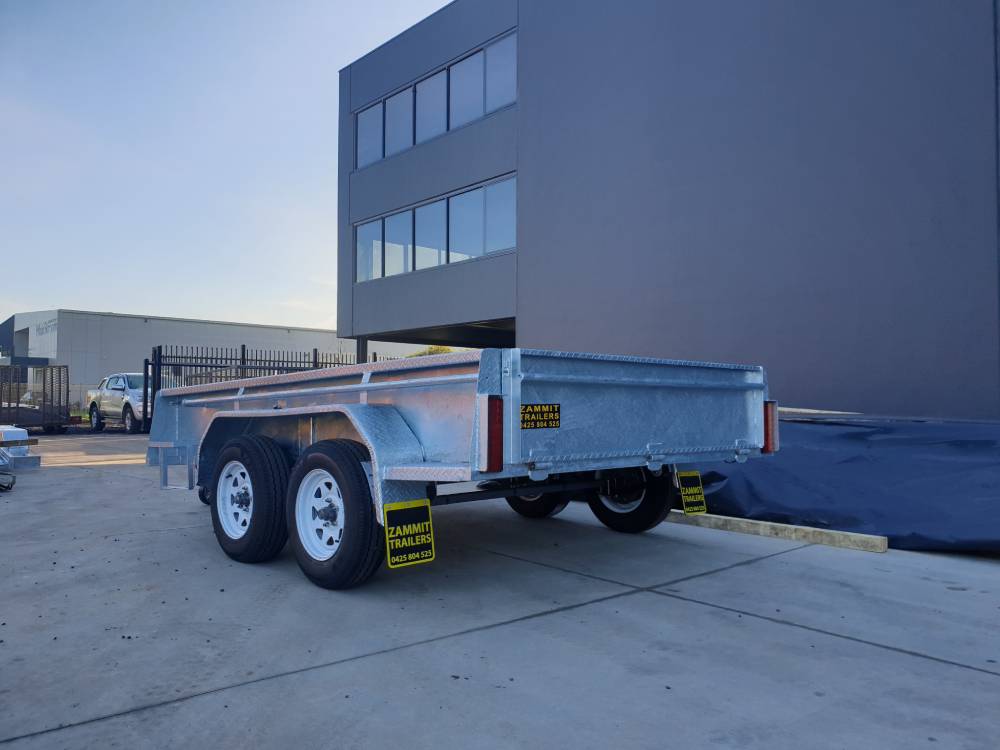

Choosing between Excavator Trailers and Plant Trailers is not always straightforward. If you move mini excavators, skid steers, compact loaders or other machinery around Melbourne, the right trailer depends on more than just weight. Access angle, deck layout, tie-down points, towing setup and the type of work you do every day all matter. This guide breaks down the real differences between trailer styles so you can work out which option suits your equipment, your vehicle and your jobs without paying for features you do not need.
Why this choice matters on real Melbourne worksites
A trailer that looks right on paper can become frustrating very quickly on site. You might have enough rated capacity, but if the ramps are too steep, the deck is too short or the balance is wrong behind your tow vehicle, loading becomes slower and riskier than it should be.
For tradies, landscapers, earthmovers and civil contractors, trailer choice affects day-to-day productivity. The right setup can save time at every job, reduce wear on machinery and make towing feel more stable on Melbourne roads, freeways and outer suburban job sites. The wrong setup can mean awkward loading, poor weight distribution and unnecessary stress every time you move equipment.
What counts as an excavator trailer?
Excavator Trailers are generally designed around the dimensions, loading style and weight profile of excavators, especially mini excavators and compact machines. These trailers often prioritise:
- strong load capacity for concentrated machine weight
- ramp and deck designs suited to tracked equipment
- stable towing with machinery positioned correctly over the axles
- durable tie-down points for securing plant safely
- layouts that make repeat loading and unloading easier
If your main machine is an excavator, this kind of trailer is often the most practical fit. It is built with that use case in mind rather than trying to cover every machinery type equally.
If you want to see purpose-built Excavator Trailers Melbourne buyers often choose, it helps to compare deck sizes, ramp options and load ratings side by side.
What counts as a plant trailer?
Plant Trailers are broader in their application. They are commonly used to carry a range of equipment, such as:
- mini excavators
- skid steers
- walk-behind rollers
- scissor lifts
- small loaders
- general site machinery
The main appeal of Plant Trailers Melbourne operators use is versatility. If your workload changes week to week, a plant trailer can be a flexible solution that handles different machine shapes and sizes.
This does not automatically make it the better choice. A more general-purpose trailer can sometimes involve compromise if one machine makes up most of your work. The key question is whether you need specialisation or flexibility.
Start with the machinery you move most often
The easiest way to decide is to ignore the brochure language for a moment and look at your actual equipment list.
If you mostly move mini excavators
An excavator-focused trailer often makes more sense. Tracked machines load differently to wheeled machines, and they carry weight in a concentrated way. A trailer designed for excavators can better suit the machine footprint, track position and tie-down needs.
If you move mixed equipment
A plant trailer may be the better option. If one week you are moving a 1.7 tonne excavator and the next a skid steer or compactor, a broader platform may give you better long-term value.
If your machinery is growing
Think ahead. Many operators buy for the machine they have now, then upgrade equipment 12 months later and outgrow the trailer. It is worth considering your likely next machine, not just your current one.
That is where comparing Plant Trailers Melbourne contractors rely on can be useful if your fleet is likely to change.
Load capacity is only part of the story
Buyers often focus first on ATM and payload, and those numbers matter, but they are only one part of trailer suitability. A trailer can technically carry your machine while still being awkward or inefficient to use.
Look at the full picture:
- machine operating weight including attachments
- bucket or accessory size and how it sits on the deck
- deck length and width relative to track or tyre position
- tow ball download once the machine is positioned correctly
- overall trailer tare and how much real payload remains
For example, a mini excavator with a few attachments may need more deck planning than a simple payload figure suggests. Likewise, a skid steer may fit within the rating but require a wider or differently balanced loading area.
When comparing Excavator Trailers and Plant Trailers, think beyond headline capacity. Daily usability matters just as much.
Access and loading angle can make or break the decision
One of the biggest practical differences between trailer types is how machinery gets on and off the deck. This is where many buying decisions are won or lost.
Tracked excavators generally benefit from a loading setup that feels predictable and stable. Ramp angle, ramp width and transition onto the deck all affect how confident the operator feels when loading.
A steeper ramp may be manageable for some wheeled machinery but less ideal for tracked equipment with lower clearance or a different balance point. If your jobs involve frequent loading on uneven ground, this becomes even more important.
Things to assess during comparison
- ramp length
- ramp strength
- ramp support and traction
- beavertail or deck transition design
- clearance for buckets, arms or attachments
In simple terms, if loading feels awkward, it probably is. A trailer should help your workflow, not slow it down.
Deck design affects versatility more than most buyers expect
Deck layout has a direct impact on how many machine types a trailer can handle comfortably. This is often where specialised excavator trailers and more general plant trailers begin to differ.
A trailer built around excavator transport may have a layout that suits track spacing and machine positioning particularly well. A plant trailer may be designed to accommodate a wider range of machinery footprints and attachment combinations.
Consider how the deck works for:
- tracked versus wheeled machines
- machines with front-heavy balance
- extra buckets or attachments
- tool storage or accessory placement
- safe tie-down access around the machine
If you carry attachments regularly, the usable deck space matters as much as the base machine itself. Some buyers only discover this after the first few jobs, when they realise there is nowhere sensible to place buckets, augers or compactors while keeping weight distributed properly.
Towing vehicle compatibility needs a realistic check
Your trailer is only one side of the equation. The tow vehicle must suit the combined setup, and this is where buyers can get caught out if they only look at the trailer in isolation.
Before choosing between Excavator Trailers and Plant Trailers, check:
- your vehicle’s towing capacity
- tow ball download limits
- braked towing limits
- GCM and any practical payload restrictions in the tow vehicle
- how often you tow in metro traffic versus open-road conditions
A trailer that suits a larger ute or truck may not be the best match for a lighter towing setup. If your work takes you across Melbourne suburbs all day, with frequent starts, stops and tighter access, stability and manoeuvrability are just as important as raw carrying capacity.
The most useful question is not just, Can my vehicle tow it? It is, Can my vehicle tow it comfortably and safely every week?
Think about the jobs you do, not just the machine you own
Two operators with the same excavator may need completely different trailer setups because their work is different.
Landscapers
If you are in landscaping, you may move a compact excavator one day and additional site gear the next. Versatility can be valuable, especially if trailer space needs to work around changing tools and materials.
Civil and construction crews
If a trailer mainly moves one machine between repeat commercial or civil jobs, a more dedicated excavator setup may deliver simpler loading and more efficient transport.
Trade and hire applications
If the trailer is used by multiple drivers or for mixed gear, consistency and flexibility become more important. A plant trailer can offer broader utility where the load changes regularly.
In other words, your trailer should match your workflow, not just your machine spec sheet.
When an excavator trailer is usually the better fit
An excavator-focused trailer is often the better option when your work revolves around one core machine type and you want a setup optimised for that task.
It may suit you best if:
- you transport a mini excavator on most jobs
- you want loading geometry that suits tracked machinery
- your attachment and tie-down needs are excavator-specific
- you value a trailer built around repeated excavator transport rather than mixed-use hauling
- you want a layout that reduces compromise day to day
This kind of trailer can be a smart choice for owner-operators who want straightforward, reliable machinery transport without adapting a more general trailer to a specialised job.
When a plant trailer is usually the better fit
Plant Trailers are often the better match when flexibility is the priority. If your machinery mix changes often, or if your business handles different site equipment from week to week, a plant trailer can cover more scenarios.
It may suit you best if:
- you move several machine types, not just excavators
- you need broader deck usability
- you carry varied attachments or accessories
- your business is growing into new machinery categories
- you want one trailer that can support a wider range of work
If that sounds like your operation, it is worth reviewing Plant Trailers for Sale to compare practical configurations rather than choosing on price alone.
Common mistakes Melbourne buyers make when comparing trailers
Most trailer buying mistakes happen because the decision is made too quickly or based on one number.
Here are some of the most common issues:
- buying only for current weight, not future machinery upgrades
- underestimating the space needed for attachments
- ignoring loading angle and ramp usability
- choosing a trailer that technically fits the load but poorly suits the tow vehicle
- focusing on price before checking daily practicality
- assuming all plant trailers and excavator trailers are interchangeable
A good comparison should account for your machinery, towing vehicle, job types and expected business growth. That is how you avoid buying twice.
How to choose the right trailer with confidence
If you are narrowing down Excavator Trailers Melbourne operators use or comparing them against Plant Trailers Melbourne businesses depend on, keep the process simple.
- List the machines you move most often.
- Add their real operating weights with attachments included.
- Note the loading style, track or tyre width, and deck space required.
- Check your tow vehicle’s actual towing limits and usability.
- Think about whether your work is specialised or mixed-use.
- Choose the trailer design that supports your most common jobs with the least compromise.
If your work is centred on excavators, a purpose-built excavator trailer often gives you the cleanest fit. If your work involves a broader mix of machinery, a plant trailer may offer better flexibility over time.
The right trailer is the one that makes loading easier, towing more stable and every job more efficient. When you choose based on real use, not just a spec sheet, you are far more likely to end up with a trailer that works hard for your business for years.


